- VIAC
-
ARBITRATION
- Arbitrate at VIAC
- VIAC eCase
- Combination of Arbitration and Mediation
- International Arbitration
- Resources
- NEWS & EVENTS
- Contact
-




On the morning of 15 August 2026, in Ho Chi Minh City, within the framework of the Legal Management Series in Ho Chi Minh City 2026 (abbreviated as “LMS 2026”), the Roundtable discussion: Business Legal Lens (BLL) #01 themed “Conditions precedent in loan agreements: Understanding correctly to prevent risks”, was co-organised by the Vietnam International Arbitration Centre (VIAC) and the Ho Chi Minh City Investment and Trade Promotion Centre (ITPC). The event attracted the participation of numerous delegates, including business representatives, legal counsel, and lawyers in Ho Chi Minh City, gathering to discuss practical issues relating to conditions precedent in loan agreements and key considerations for identifying and mitigating legal risks.

Business Legal Lens was collaboratively developed and launched for the first time in 2026. It is designed as a direct dialogue model, placing the actual challenges of enterprises at the centre of the discussion to enhance interactivity, focus discussions on specific practical issues, and foster connections between businesses and speakers as well as professional institutions.
The programme consists of 02 sessions:
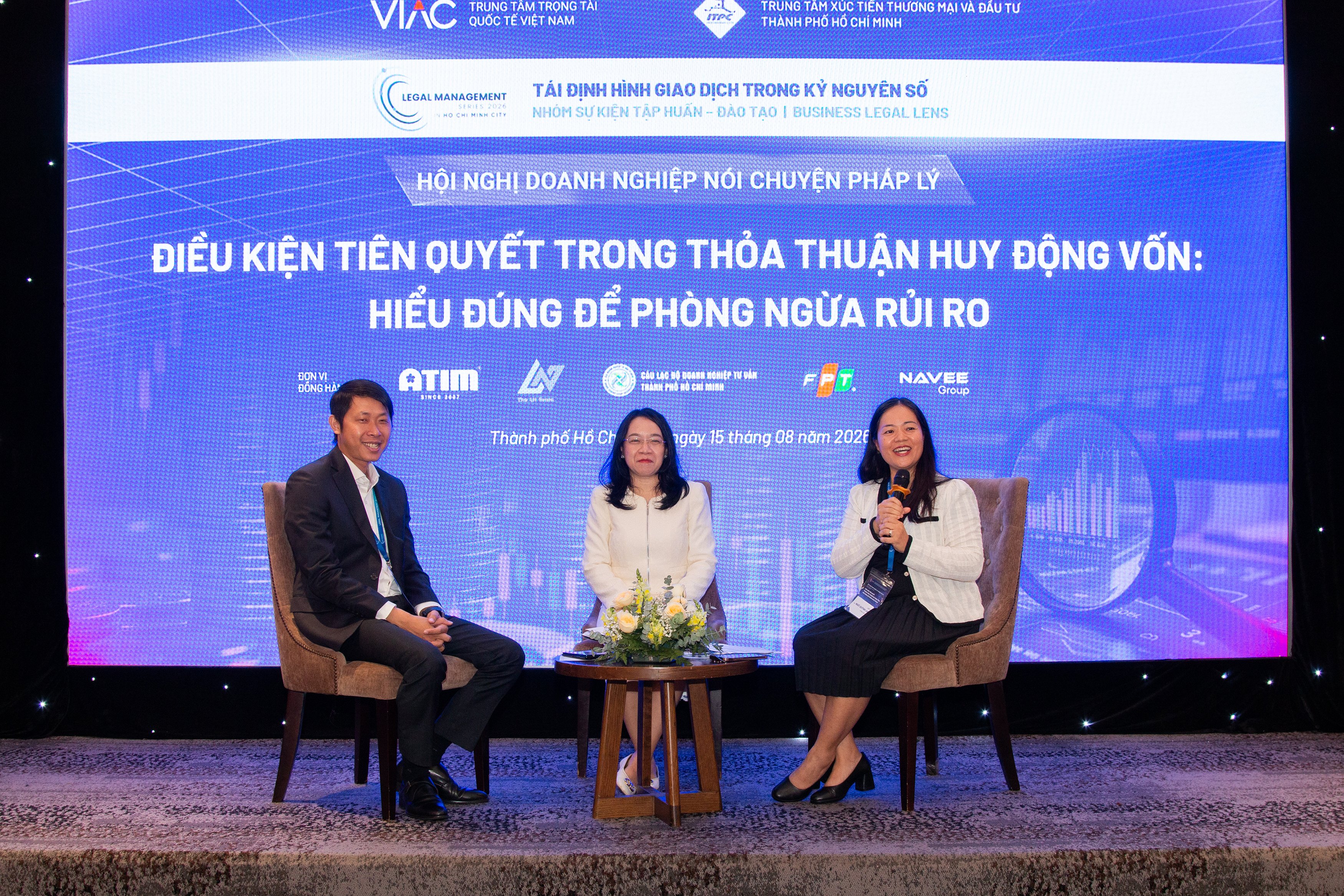
Speakers sharing insights at the Roundtable
Opening the Legal Insight Talk, the speakers discussed the group of CPs relating to collateral. Sharing from the practical perspective of credit operations, Mr. Tran Vu Linh stated that for an asset to be accepted by a bank as collateral, it must meet the following four requirements:
(i) the asset must actually exist and be verifiable through lawful documentation;
(ii) the person providing the asset must have the right of disposal over it;
(iii) the legal status of the asset must satisfy the conditions for security interest registration; and
(iv) the asset must be capable of being realised when a risk occurs.
From the perspective of an advisory firm that has accompanied enterprises in accessing funding sources outside the banking system, Ms. Ma Thanh Loan pointed out several differences in how funds approach collateral. According to Ms. Loan, while banks often focus heavily on the asset itself and the ability to handle the asset, international lending funds and private equity funds tend to take a broader interest in projected future cash flows, the capacity of the management team, and the level of transparency in the enterprise's operations. Consequently, the funds' approach to collateral can also be more flexible, encompassing property rights arising from contracts, after-acquired property, and other economic rights and interests suitable for the transaction structure.
Following the discussions on how lenders examine collateral, Ms. Ngo Quynh Anh supplemented a legal perspective regarding the fulfilment of conditions precedent. According to her, CPs are not merely conditions to be completed prior to the time of disbursement, but also an important control mechanism for the lender to assess the legal readiness and security of the loan.
"Therefore, enterprises need to proactively review and prepare asset documentation right from the initial stage, especially regarding issues of ownership, authority and approval of internal governing bodies, origin of the assets, potential disputes, as well as rights or encumbrances established with third parties."
In particular, regarding after-acquired property, Ms. Ngo Quynh Anh noted that enterprises should not focus solely on the expected value of the assets, but must pay special attention to the legal basis and the ability to form and establish rights over the assets in accordance with the project schedule. As the collateral does not fully exist at the time of financing, the project's cash flow generation capacity and debt repayment capacity therefore become crucial factors for the lender to evaluate and decide whether to provide financing as well as the extent of such financing.
The first group comprises legal conditions that directly affect the risk level of the loan, such as a construction permit for a real estate project; in principle, these conditions must be completed prior to disbursement.
The second group includes conditions with a lower level of impact or those that can be controlled through other mechanisms, whereby the bank may consider more flexible approaches, such as partial disbursement, blocking of the disbursed funds, or applying additional control measures.
In addition to traditional legal and financial conditions, the speakers also mentioned the trend of expanding due diligence and financing criteria, linked to digital transformation and sustainable development requirements. Ms. Ma Thanh Loan stated that, especially for private equity investments, investors will often conduct comprehensive due diligence, focusing not only on the financial situation but also considering digital transformation capacity, the level of technology and AI application, as well as the fulfilment of ESG criteria. However, according to Ms. Loan, these requirements are not necessarily designed as CPs prior to financing. In many cases, they are expressed in the form of commitments or ongoing obligations after the investment or loan has been disbursed, thereby allowing the financing party to monitor and mitigate risks throughout the cooperation process.
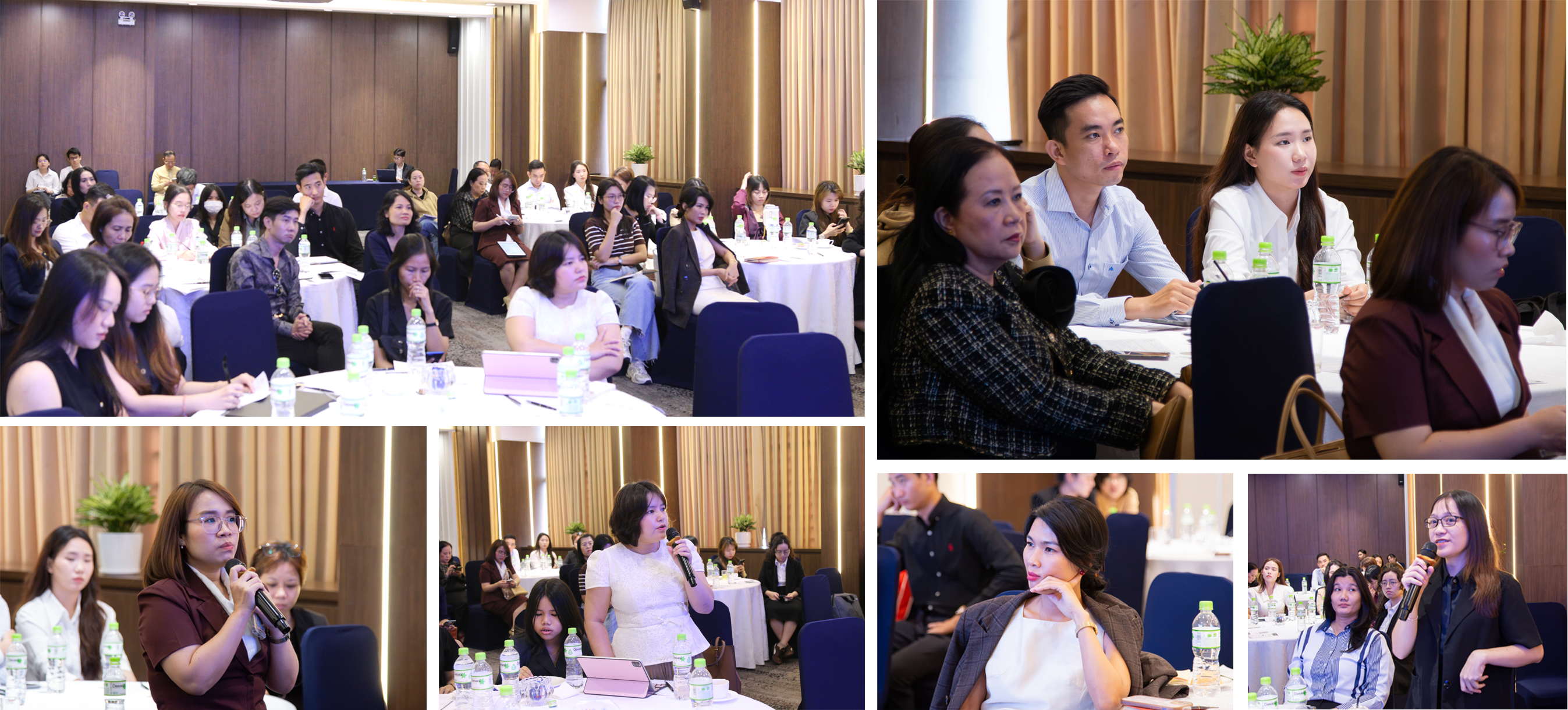
Roundtable Delegates
During the Legal Clinic session, the speakers continued to discuss and address five cases submitted by enterprises to the Organising Committee, revolving around the following issues: (i) accessing capital when the enterprise lacks tangible assets for collateral; (ii) using third-party assets as collateral; (iii) verifying the status and capacity of foreign lenders; and (v) events of default, as well as the mechanism for early debt recovery.
Concluding the programme, the discussions from the diverse perspectives of the bank, the investment advisory firm, and the legal expert helped the delegates better identify common groups of conditions precedent, how the financing party evaluates and handles each group of conditions, as well as the issues enterprises need to consider during document preparation and transaction negotiation. Thereby, the speakers emphasised the necessity of proactively reviewing, preparing, and negotiating CPs right from the initial stage, rather than only addressing them when these conditions become obstacles to the progress of disbursement or capital mobilisation.
_____________________________
See other Business Legal Lens (BLL) under LMS 2026:
| Commerce Sector | Business Legal Lens: Force majeure: The gap between business understanding and legal approach |
![[Recap LMS 2026] Business Legal Lens (BLL) #02: “Force majeure: The gap between business understanding and legal approach”](/images/News-and-Events/2026/News/LMS 2026/BLL02/IMG_0136.jpg)
![[Recap LMS 2026] Talkshow “Exemption from liability for technology-related risks in logistics transactions”](/images/News-and-Events/2026/News/LMS 2026/Logistics/LMS2026_2708---Slideshow-1.jpg)
![[Recap LMS 2026] Talkshow “Commercial contracts with counterpart clauses – Streamlining contract formation or increasing legal risks?"”](/images/News-and-Events/2026/News/LMS 2026/Thuong mai/LMS2026_2008_Speakers.png)
![[Recap LMS 2026] Talkshow “Arbitral jurisdiction in resolving disputes arising from digital financial transactions"](/images/News-and-Events/2026/News/LMS 2026/Tai chinh/LMS2026_260813__Backdrop.png)
![[LMS 2026] VIAC and ITPC successfully co-organized the Conference on: “Digital transformation in logistics transactions: Implementing a hybrid model in the transitional phase”](/images/News-and-Events/2026/News/LMS 2026/IMG_6536.JPG)
![[LMS 2026] VIAC and ITPC successfully co-organized the Conference on: “Digital transformation in sale of goods transactions: From partial to comprehensive”](/images/News-and-Events/2026/News/LMS 2026/IMG_9941.png)



.png "Trường đại học ngoại thương")